
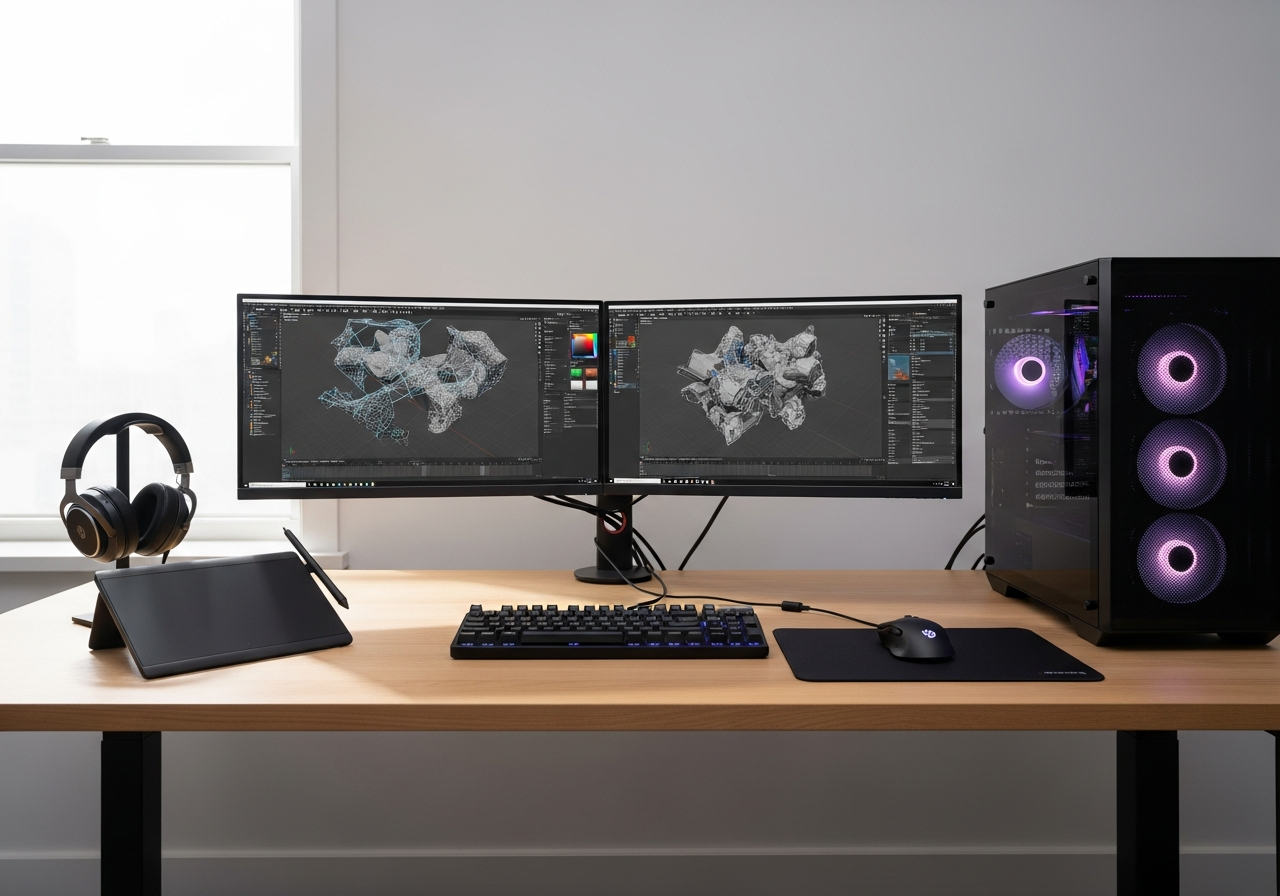
Budgeting for High-End Workstations During Game Design Courses
Embarking on a game design program in Alberta requires more than just tuition planning—you’ll need a high-performance workstation capable of handling demanding software like Unity, Unreal Engine, and Blender. Alberta’s leading institutions, including the University of Alberta’s $1,950 certification program, NAIT’s comprehensive $10,000+ diploma, and Alberta University of the Arts’ specialized facilities, all require students to work with GPU-intensive applications that push standard computers to their limits.
The total investment for Alberta game design students typically ranges from $12,000 to $22,000, encompassing tuition fees, hardware costs ($1,000-$2,000 CAD for capable builds), materials, and peripherals. Fortunately, Alberta offers unique funding opportunities like the Canada-Alberta Job Grant and provincial Student Aid programs that can significantly offset these expenses, making professional game development education more accessible than ever.
Why High-End Workstations Are Essential for Alberta Game Design Courses
Alberta’s game design programs demand workstations that can seamlessly handle real-time 3D rendering, complex physics simulations, and multi-layered digital asset creation. At institutions like NAIT and Alberta University of the Arts, students regularly work on projects requiring simultaneous operation of Unity or Unreal Engine alongside modeling software like Blender and Adobe Creative Suite. These GPU-intensive tasks can bring underpowered systems to a standstill, directly impacting learning outcomes and project completion times.
The performance gap between course minimum requirements and industry-standard workflows is substantial. While institutions may list basic specifications for enrollment, successful students quickly discover that professional-grade game development requires significantly more computational power. Alberta’s competitive game development scene, anchored by studios in Calgary and Edmonton, expects graduates to arrive with experience on hardware that mirrors professional environments.
Modern game engines utilize GPU acceleration for everything from real-time lighting calculations to AI pathfinding simulations. Students working on demanding projects often find themselves rendering scenes, compiling code, and testing gameplay mechanics simultaneously—workflows that benefit tremendously from multi-core processors, dedicated graphics cards, and ample system memory.
Software Requirements in Alberta Programs
Alberta’s game design curricula center around industry-standard software packages that form the backbone of professional game development. Understanding these requirements helps students make informed hardware decisions that will serve them throughout their academic journey and beyond.
The software ecosystem demands robust system specifications to maintain productive workflows, particularly when working with large asset libraries or complex scene compositions that are common in advanced coursework.
- Unity 3D Engine – Primary development platform for mobile and indie game projects, requiring dedicated GPU memory for real-time rendering
- Unreal Engine 5 – Industry-leading engine for AAA game development with intensive GPU requirements for Nanite virtualized geometry
- Blender 3D Suite – Open-source modeling and animation software leveraging CUDA/OpenCL acceleration for rendering workflows
- Adobe Creative Suite – Photoshop, Illustrator, and After Effects for texture creation and motion graphics integration
- Rhinoceros 3D – Precision modeling software used in technical design courses for architectural and mechanical asset creation
- Substance Designer/Painter – Material authoring tools requiring GPU acceleration for real-time texture preview and generation
Minimum vs. Recommended Hardware
The disparity between institutional minimum requirements and practical performance needs becomes apparent during intensive project work. While basic specifications might suffice for introductory coursework, advanced students benefit significantly from hardware that exceeds minimum standards.
Professional game development workflows often involve multitasking across multiple demanding applications, making recommended specifications essential for maintaining productivity during crunch periods and complex project phases.
| Component | Minimum | Recommended for Game Dev |
|---|---|---|
| Processor | Intel i3 / AMD Ryzen 3 | Intel i5-12400F / AMD Ryzen 5 5600X |
| Graphics Card | GTX 1050 / RX 560 | RTX 3060 / RX 6600 XT |
| Memory | 8GB RAM | 32GB DDR4-3200 |
| Storage | 500GB HDD | 1TB NVMe SSD + 2TB HDD |
| Display | 1080p 60Hz | 1440p 144Hz or 4K 60Hz IPS |
Overview of Game Design Programs and Tuition Costs in Alberta
Alberta’s game design education landscape offers diverse pathways for aspiring developers, from focused certification programs to comprehensive diploma tracks. Understanding the investment required for each program helps students plan their budget effectively while considering the long-term career benefits of specialized game development education.
Tuition costs vary significantly across institutions, with shorter certification programs providing focused skill development and longer diploma programs offering comprehensive industry preparation. Additional fees for lab access, software licensing, and specialized equipment usage should be factored into total education costs.
The return on investment for these programs remains strong, with Alberta’s growing tech sector and proximity to major gaming hubs in Vancouver and Seattle providing excellent career opportunities for graduates with the right technical skills and portfolio development.
| Program | Institution | Duration | Tuition (CAD) | Additional Fees |
|---|---|---|---|---|
| Game Development Certificate | University of Alberta | 8 months | $1,950 | $200 lab fees |
| Digital Media & IT Diploma | NAIT | 2 years | $12,400 | $1,200 equipment |
| Game Art & Design | Alberta University of the Arts | 4 years | $24,800 | $2,000 studio access |
| Interactive Design | SAIT | 2 years | $14,600 | $800 software licensing |
| Game Programming | Bow Valley College | 18 months | $18,900 | $600 lab materials |
Funding Options for Tuition and Hardware
Alberta students have access to several funding mechanisms that can significantly reduce the financial burden of game design education. The Canada-Alberta Job Grant provides up to $10,000 per person for skills training, making it particularly valuable for diploma-level programs at institutions like NAIT and SAIT. This grant covers up to two-thirds of training costs, including tuition and related expenses, though it requires employer participation or employment commitment.
Alberta Student Aid offers both grants and loans specifically designed for post-secondary education, with the added benefit that grants don’t require repayment. The program considers family income, program costs, and living expenses when determining award amounts. Additionally, many institutions offer payment plans that allow students to spread costs across multiple semesters, making it easier to budget for both tuition and necessary hardware purchases.
Several Alberta-specific scholarships target technology and creative programs, including the Alberta Scholarship Programs and institution-specific awards. Some local game development studios also offer internship programs with educational funding components, providing both financial support and industry connections that prove valuable for career development.
Budget Breakdown for High-End Workstation Builds
Building a capable game development workstation in Alberta requires balancing performance needs with budget constraints, particularly when factoring in the total cost of education. The sweet spot for most students falls between $1,200-$1,800 CAD, providing sufficient power for demanding coursework while leaving room in the budget for peripherals and software.
Hardware prices in Canada include additional costs like GST and import duties, making strategic component selection crucial for staying within budget. Focusing on components that directly impact game development workflows—particularly the GPU and RAM—ensures maximum return on investment for educational purposes.
| Component | Recommendation | CAD Cost Range | Why for Game Design |
|---|---|---|---|
| Processor | Intel i5-12400F / AMD Ryzen 5 5600X | $180-$250 | Multi-threading for builds and simulations |
| Graphics Card | RTX 3060 / RX 6600 XT | $400-$550 | Real-time rendering and GPU acceleration |
| Memory | 32GB DDR4-3200 (2x16GB) | $160-$220 | Large scene files and multitasking |
| Storage | 1TB NVMe SSD | $120-$180 | Fast asset loading and project compilation |
| Motherboard | B550/B660 chipset | $120-$180 | Stable platform with upgrade potential |
| Power Supply | 650W 80+ Gold modular | $90-$130 | Reliable power for GPU-intensive work |
| Case & Cooling | Mid-tower with adequate airflow | $80-$150 | Temperature management during long sessions |
Sample $1,500 CAD Game Dev Build
This carefully balanced build prioritizes components that directly impact game development performance while maintaining cost efficiency. Each component selection considers the specific demands of Unity, Unreal Engine, and content creation software commonly used in Alberta’s game design programs.
The build emphasizes future upgrade potential, allowing students to enhance their systems as their skills develop and project complexity increases throughout their academic journey.
- AMD Ryzen 5 5600X Processor ($220) – Six cores with excellent single-thread performance for game engine responsiveness and multi-thread capability for asset compilation
- MSI B550M Pro-B Motherboard ($140) – Reliable chipset with PCIe 4.0 support and upgrade potential for future graphics cards and storage
- Corsair Vengeance LPX 32GB DDR4-3200 ($180) – Adequate memory for large projects and multitasking between development tools
- NVIDIA RTX 3060 Graphics Card ($450) – Ray tracing support, DLSS acceleration, and 12GB VRAM for modern game development workflows
- Samsung 980 1TB NVMe SSD ($130) – Fast loading times for projects and reduced compilation delays during iterative development
- Corsair CV650 Power Supply ($95) – 80+ Bronze efficiency with sufficient headroom for system stability during intensive tasks
- Cooler Master MasterBox Q300L Case + CPU Cooler ($85) – Compact design with adequate cooling for sustained development work
Scaling Budgets: Entry to Pro Level
Entry-level builds starting around $800 CAD can handle basic coursework using older but capable components like the GTX 1660 and 16GB of RAM. These systems work well for students beginning their journey or those with tight budgets, though they may struggle with advanced rendering tasks and complex scenes in upper-level courses.
Professional-tier builds reaching $2,500-$3,000 CAD incorporate components like the RTX 4070 or RX 7800 XT, 64GB of RAM, and high-end processors that mirror industry studio setups. These investments pay dividends for students planning to freelance during their studies or those targeting competitive internship positions requiring portfolio work that demonstrates technical proficiency.
Additional Costs: Materials, Software, and Peripherals
Beyond the core workstation investment, game design students must budget for numerous additional expenses that can significantly impact their total educational costs. Course materials typically range from $50-$150 per semester, including specialized textbooks on game theory, programming languages, and digital art techniques that aren’t readily available in digital formats.
Peripheral costs often catch students off-guard, particularly the necessity of high-quality monitors for detailed texture work and code review. A secondary monitor dramatically improves productivity when working with multiple applications simultaneously, while a graphics tablet becomes essential for digital art and animation courses offered at institutions like Alberta University of the Arts.
Software licensing represents another significant expense, though many programs provide educational discounts or lab access to expensive packages. Students should factor in personal licenses for software they’ll use beyond graduation, as well as cloud storage solutions for backing up project work and collaborating with team members.
Professional development costs including game development conference attendance, online course subscriptions, and portfolio hosting services contribute to career preparation but require careful budgeting throughout the program duration.
- Textbooks and Course Materials ($200-$600/year) – Specialized game development texts, programming references, and digital art resources with limited used market availability
- High-Quality Monitor Setup ($300-$800) – 1440p or 4K displays essential for detailed work, with dual-monitor configurations improving workflow efficiency significantly
- Graphics Tablet and Stylus ($150-$400) – Wacom or similar devices required for digital art courses and texture creation workflows
- Professional Software Licenses ($500-$1,200/year) – Personal copies of Adobe Creative Suite, Substance packages, and specialized tools for post-graduation use
- External Storage and Backup Solutions ($100-$250) – Large capacity drives for project archives and cloud storage subscriptions for collaboration and backup
- Gaming Controllers and VR Equipment ($200-$500) – Testing devices essential for understanding player experience and developing for multiple platforms
- Professional Development Resources ($300-$800/year) – Conference tickets, online learning platforms, and portfolio hosting services for career advancement
Hidden Expenses to Watch For
Many Alberta game design students discover unexpected costs that can strain carefully planned budgets. Lab fees and equipment usage charges vary significantly between institutions, with some programs requiring students to pay hourly rates for access to high-end rendering farms or VR development equipment. Understanding these costs upfront helps students plan their project timelines and budget allocation more effectively.
Textbook costs in game development programs often exceed traditional programs due to the specialized nature of the content and rapid industry evolution requiring frequent new editions. However, students can leverage institutional libraries, form study groups for textbook sharing, and utilize lab computers for software access to minimize these expenses.
Transportation and networking costs for attending industry events, game jams, and portfolio reviews can add up quickly, particularly for students at rural campuses who need to travel to Calgary or Edmonton for opportunities. Planning these expenses into the overall education budget ensures students can take advantage of valuable career development opportunities without financial stress.
| Category | Estimated Cost (CAD) | Tips to Save |
|---|---|---|
| Lab Access Fees | $200-$800/semester | Use during off-peak hours, group project coordination |
| Premium Software Upgrades | $300-$1,000/year | Student discounts, open-source alternatives, educational versions |
| Hardware Maintenance/Upgrades | $150-$400/year | Extended warranties, component protection, gradual upgrades |
| Networking and Events | $400-$1,200/year | Student event discounts, virtual attendance, carpooling |
| Internet and Cloud Storage | $300-$600/year | Student cloud plans, institutional storage access |
| Project Materials and Assets | $200-$500/semester | Free asset stores, student collaborations, open-source resources |
Cost-Saving Strategies and Financing Tips
Strategic purchasing can significantly reduce the total cost of game development education without compromising learning outcomes. Buying used components, particularly previous-generation graphics cards and processors, offers substantial savings while still providing adequate performance for coursework. The used market in Alberta is particularly robust in Calgary and Edmonton, where tech workers frequently upgrade their systems.
Student discounts extend far beyond software licensing, with many hardware retailers offering educational pricing on components and complete systems. Additionally, timing purchases around back-to-school sales, Black Friday events, and new product launches can yield savings of 15-30% on major components. Building systems gradually over several months allows students to take advantage of multiple sales cycles while spreading costs across different budget periods.
Where to Buy in Alberta
Alberta offers diverse purchasing options for game development hardware, from local system integrators who provide warranty support to online retailers offering competitive pricing. Understanding the pros and cons of each option helps students make informed decisions based on their technical comfort level and budget constraints.
Local retailers provide valuable services like system assembly, testing, and ongoing support that can be particularly beneficial for students new to PC building, while online purchasing often offers better pricing and component selection for those comfortable with DIY assembly.
- Memory Express (Calgary/Edmonton) – Local retailer with competitive pricing, assembly services, and student-friendly return policies for defective components
- Canada Computers (Multiple locations) – National chain offering price matching, educational discounts, and frequent sales on gaming hardware
- Newegg.ca and Amazon.ca – Online retailers with extensive selection, competitive pricing, and reliable shipping to Alberta locations
- Local System Integrators – Custom PC builders in Calgary and Edmonton offering complete systems with warranty and support services
- University Computer Stores – Campus retailers providing educational discounts and convenient access for students without transportation
- Kijiji and Facebook Marketplace – Used hardware markets requiring careful inspection but offering significant savings on previous-generation components
Additional Financing Resources
Beyond traditional funding sources, Alberta students can explore technology-specific scholarships and grants that target STEM education and creative industries. Many local game development studios offer internship programs that include equipment stipends or loan programs for students demonstrating exceptional potential in their coursework.
Credit options specifically designed for educational technology purchases often provide 0% interest financing for qualified students, making it easier to spread hardware costs over multiple payment periods while building credit history. Some institutions also offer emergency funding for students facing unexpected financial challenges that could impact their program completion.
Total Budget Planning Worksheet
Comprehensive budget planning requires students to consider the full scope of their educational investment, including not just tuition and hardware but also the ongoing costs of materials, software, and professional development. This holistic approach prevents budget shortfalls that could interrupt academic progress or limit learning opportunities.
Planning budgets across the entire program duration, rather than semester by semester, allows students to identify peak expense periods and smooth out costs through strategic timing of major purchases and taking advantage of funding disbursement schedules.
| Budget Category | Low Estimate | High Estimate | Total |
|---|---|---|---|
| Program Tuition | $1,950 | $24,800 | $13,375 average |
| Workstation Hardware | $1,000 | $2,500 | $1,750 average |
| Materials & Software | $800 | $3,200 | $2,000 average |
| Peripherals & Equipment | $400 | $1,500 | $950 average |
| Professional Development | $300 | $2,000 | $1,150 average |
ROI: Salaries and Career Outlook
The investment in game design education and high-end workstations pays substantial dividends in Alberta’s growing technology sector. Entry-level game developers in Alberta typically earn between $54,000-$68,000 CAD annually, with experienced developers commanding salaries of $70,000-$95,000 CAD. Senior positions and specialized roles like technical artists or gameplay programmers often exceed $100,000 CAD annually, particularly in Calgary’s energy tech sector where gaming skills transfer to simulation and visualization roles.
Alberta’s strategic position between Vancouver’s gaming hub and the emerging tech scenes in Toronto and Montreal provides graduates with diverse career opportunities without the housing costs associated with larger metropolitan areas. The province’s growing film and animation industry also provides alternative career paths for game design graduates, with many skills transferring directly to visual effects and virtual production workflows that command premium salaries in the entertainment industry.