
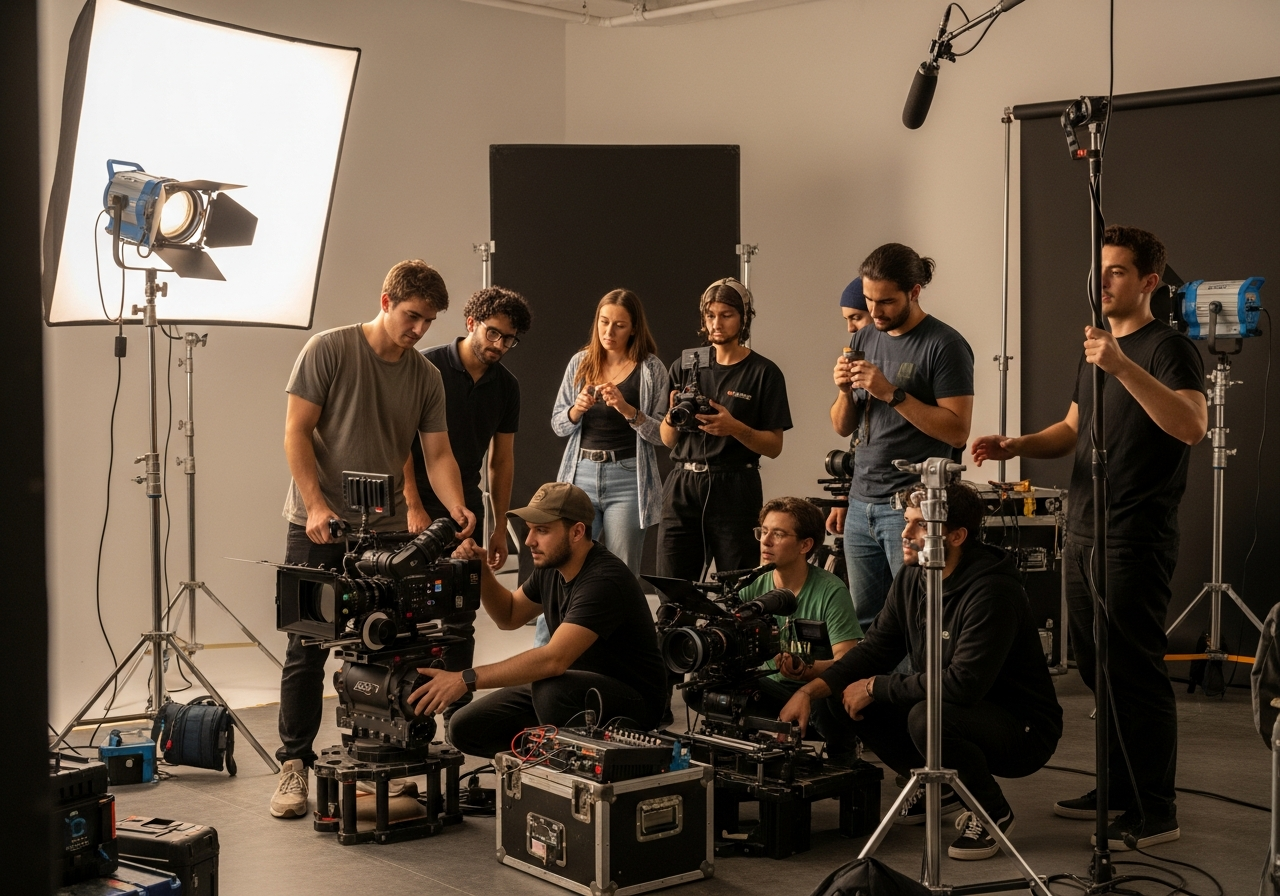
Post-Graduation Career Paths for Film Production Graduates in the Independent Sector
Toronto has solidified its position as one of North America’s most significant film production hubs, creating a thriving ecosystem for independent filmmakers and emerging graduates. The city’s diverse neighborhoods, world-class facilities, and competitive tax incentives have attracted both major studio productions and a vibrant independent film community that offers unique opportunities for recent film production graduates.
Film production graduates entering Ontario’s independent sector can explore diverse career paths spanning traditional production roles, cutting-edge VFX and animation positions, and essential entry-level opportunities that serve as stepping stones to senior roles. However, navigating this landscape presents distinct challenges, particularly the freelance nature of most positions and the critical importance of building strong professional networks within the tight-knit independent film community.
Overview of Ontario’s Independent Film Landscape
Toronto’s emergence as a premier film production center has created an unparalleled environment for independent filmmakers and graduates seeking to establish their careers. The city’s unique combination of urban diversity, architectural variety, and proximity to both American and European markets has made it an attractive destination for productions of all scales.
Recent industry statistics demonstrate the robust growth of Ontario’s independent sector, with over 2,400 screen-based productions filmed in the province annually. While major studio productions often capture headlines, the independent film sector represents approximately 60% of all projects, creating consistent opportunities for graduates willing to work on smaller budgets but more creative productions.
The independent focus in Ontario differs significantly from traditional studio environments, emphasizing collaborative decision-making, creative problem-solving, and multi-skilled professionals who can adapt to rapidly changing production demands. This environment particularly benefits graduates who demonstrate flexibility and eagerness to learn across multiple departments.
Growth Drivers in Indie Sector
Several key factors continue to fuel expansion within Ontario’s independent film community, creating sustained opportunities for new graduates. These growth drivers represent both immediate job creation and long-term career development prospects.
- Annual film festivals including TIFF, Hot Docs, and smaller regional festivals that showcase and fund independent productions
- Provincial tax incentives offering up to 35% refundable tax credits for qualifying Ontario productions
- Industry associations like Ontario Creates providing funding, mentorship, and professional development programs
- Streaming platform demand for diverse content creating new distribution channels for independent films
- Educational partnerships between film schools and production companies facilitating graduate placement programs
- Co-production agreements with international partners expanding market reach and funding opportunities
Challenges for New Grads
Despite the sector’s growth, film production graduates face significant challenges when entering Ontario’s independent film market. The freelance nature of most positions means irregular income patterns and constant networking requirements to secure consecutive projects.
Competition remains intense, with established professionals often preferred for key roles, leaving graduates to prove themselves through entry-level positions or unpaid internships. Building a sustainable career requires persistence, financial planning for income gaps, and continuous skill development to remain competitive in an evolving technological landscape.
Entry-Level Roles for Film Production Graduates
The independent film sector offers numerous entry points for graduates, each requiring specific skill sets and offering different pathways for career advancement. Understanding salary expectations and role requirements helps graduates make informed decisions about their career trajectories.
These positions typically offer hands-on experience across multiple departments, a hallmark of independent productions where budget constraints require versatile team members. Many graduates find that starting in entry-level roles provides broader industry exposure than specialized positions in larger productions.
| Role | Key Skills | Indie Sector Fit | Avg Entry Salary (CAD) |
|---|---|---|---|
| Production Assistant | Organization, communication, adaptability | High – foundation for all departments | $16-20/hour |
| Assistant Editor | Avid, Premiere Pro, file management | Very High – post-production critical | $22-28/hour |
| Camera Operator | Camera systems, composition, teamwork | High – versatility valued | $25-35/hour |
| Sound Recordist | Audio equipment, mixing, problem-solving | Medium – budget constraints | $20-30/hour |
| Script Coordinator | Writing, attention to detail, software | Medium – smaller crew sizes | $18-25/hour |
| Location Assistant | Research, negotiation, logistics | High – cost-effective locations crucial | $17-23/hour |
| Casting Assistant | People skills, database management | Medium – smaller casting budgets | $16-22/hour |
| Grip/Gaffer Assistant | Physical stamina, equipment knowledge | High – hands-on learning | $18-26/hour |
Production Assistant Pathways
The production assistant role serves as the most accessible entry point for film production graduates, offering exposure to all departments while building essential industry relationships. Success in PA positions often determines future advancement opportunities within Ontario’s independent film community.
Understanding the strategic approach to PA work can accelerate career progression significantly. Many successful directors, producers, and department heads began their careers as production assistants, leveraging these positions to identify their preferred specialization areas.
- Submit applications to multiple independent production companies simultaneously, emphasizing flexibility and eagerness to learn
- Demonstrate reliability and positive attitude during initial projects to secure recommendations for future opportunities
- Observe and assist different departments during downtime to identify preferred career specialization areas
- Build relationships with crew members across all levels, from fellow PAs to department heads and producers
- Volunteer for additional responsibilities that showcase initiative and problem-solving capabilities
- Document experiences and contacts in a professional network database for future job applications
- Transition to specialized assistant roles within preferred departments after gaining comprehensive production experience
Core Production Careers in Indie Films
Independent film production offers distinct advantages for graduates seeking hands-on experience across multiple production phases. The collaborative nature of indie sets encourages cross-departmental learning and rapid skill development.
- Pre-production roles including development, casting, and location scouting that shape project foundations
- Principal photography positions covering cinematography, sound recording, and on-set coordination
- Post-production opportunities in editing, color correction, and sound design with direct filmmaker collaboration
- Production management roles that oversee budgets, schedules, and crew coordination throughout all phases
- Creative positions including writing, directing assistance, and script supervision that influence storytelling
- Technical specializations in equipment operation, data management, and workflow optimization
Pre-Production Opportunities
Pre-production represents a critical phase where independent films establish their creative vision and logistical framework. Graduates entering this phase often work closely with producers and directors, gaining insight into project development from conception through principal photography preparation.
Story development roles involve script analysis, research, and creative collaboration that directly influences final productions. Casting positions require strong interpersonal skills and understanding of character requirements, often involving coordination with talent agents and performance evaluation.
Location scouting and management positions combine creative vision with practical logistics, requiring graduates to identify cost-effective shooting locations that serve story requirements while remaining within budget constraints typical of independent productions.
On-Set Crew Positions
On-set positions offer immediate immersion in active film production, providing graduates with real-time problem-solving experience and direct collaboration with experienced professionals. These roles typically require physical stamina, technical competence, and ability to work efficiently under pressure.
VFX and Animation Paths for Grads
Ontario’s VFX and animation sector has experienced remarkable growth, with Toronto emerging as a global center for digital content creation. Independent productions increasingly incorporate visual effects and animation elements, creating opportunities for graduates with technical and artistic skills.
The integration of VFX into independent films has democratized access to sophisticated visual storytelling tools, allowing smaller productions to achieve professional-quality results previously exclusive to major studio projects. This trend creates consistent demand for entry-level VFX artists willing to work on diverse project types.
| Role | Training Needed | Indie Demand | Ontario Hubs |
|---|---|---|---|
| Junior Compositor | Nuke, After Effects, color theory | High | Toronto, Ottawa |
| 3D Modeler | Maya, Blender, sculpting skills | Medium | Toronto, Hamilton |
| Motion Graphics Artist | Cinema 4D, After Effects, design | Very High | Toronto, Mississauga |
| Texture Artist | Substance Painter, Photoshop | Medium | Toronto, Waterloo |
| Animator (2D/3D) | Character animation, rigging | High | Toronto, Kingston |
| VFX Coordinator | Project management, pipeline | High | Toronto, London |
Virtual Production in Indies
Virtual production technologies, including motion capture and previsualization, are becoming increasingly accessible to independent filmmakers through rental facilities and collaborative studios throughout Ontario. These technologies enable independent productions to achieve sophisticated visual effects while maintaining cost efficiency.
Graduates specializing in virtual production often work across multiple projects simultaneously, providing technical expertise to filmmakers who lack in-house VFX capabilities. This specialization offers consistent work opportunities and exposure to diverse creative approaches within the independent film community.
Film-Adjacent Careers Beyond Production
Ontario’s film ecosystem extends far beyond traditional production roles, encompassing industry support organizations, festivals, and business development entities that sustain the independent film community. These positions often offer more stable employment than freelance production work while maintaining direct connection to creative projects.
Film-adjacent careers provide graduates with industry knowledge and professional networks while offering regular income and benefits typically unavailable in freelance production roles. Many professionals use these positions as stepping stones to production careers or long-term career paths within industry infrastructure.
The ecosystem approach recognizes that successful independent film communities require diverse support services, from funding administration to audience development, creating numerous opportunities for graduates with varied skill sets and interests beyond direct production involvement.
Industry Support Roles
Industry support positions provide essential services that enable independent productions to operate efficiently and access necessary resources. These roles often combine film industry knowledge with specialized professional skills in areas such as finance, law, or marketing.
- Stable employment with regular salary and benefits packages compared to freelance production work
- Opportunity to work with multiple productions simultaneously, building broad industry knowledge
- Professional development opportunities through industry conferences and training programs
- Network building with producers, directors, and key decision-makers across multiple projects
- Potential disadvantage of limited hands-on creative involvement in actual film production
- Risk of becoming disconnected from current production practices and technological developments
Marketing and Publicity
Marketing and publicity roles have evolved significantly with digital media expansion, creating new opportunities for graduates skilled in social media management, content creation, and audience engagement strategies. Independent films particularly benefit from creative, cost-effective marketing approaches that maximize limited promotional budgets.
Press agent positions involve coordinating media coverage, managing filmmaker interviews, and developing relationships with entertainment journalists and bloggers. These roles require strong communication skills and understanding of both traditional media and emerging digital platforms.
Social media specialists focus on building audience communities around specific projects or production companies, creating engaging content that connects filmmakers with potential viewers while maintaining authentic brand voice that reflects independent film values and aesthetic sensibilities.
Education and Training for Indie Success
Ontario’s educational institutions offer comprehensive programs specifically designed to prepare graduates for careers in independent film production, emphasizing practical skills and industry connections that facilitate successful career transitions. These programs often feature direct collaboration with active production companies and working professionals.
The focus on independent sector preparation distinguishes Ontario programs from those emphasizing major studio production pipelines, providing graduates with realistic expectations and applicable skills for the freelance-heavy independent film environment.
Continuing education opportunities allow working professionals to develop new skills and adapt to technological changes that continuously reshape film production workflows and career requirements.
| Institution | Program | Duration | Indie Focus |
|---|---|---|---|
| Seneca College | Broadcasting – Television | 3 years | High |
| George Brown College | Film & Television Production | 2 years | Very High |
| Humber College | Film & Media Production | 4 years | Medium |
| Sheridan College | Film & Television | 4 years | Medium |
| Algonquin College | Television Broadcasting | 3 years | High |
| Confederation College | Broadcasting – Radio & TV | 2 years | Medium |
| Ryerson University | Image Arts – Film Studies | 4 years | Very High |
| York University | Film Production | 4 years | High |
| University of Windsor | Communication, Media & Film | 4 years | Medium |
Upskilling Post-Grad
Continuous skill development remains essential for career advancement in Ontario’s rapidly evolving independent film sector. Technology changes, new storytelling approaches, and industry consolidation require ongoing professional development to maintain competitiveness.
- Pursue specialized internships with established independent production companies to gain hands-on experience
- Complete certification programs in emerging technologies such as virtual production or advanced editing software
- Attend industry workshops and masterclasses offered through film festivals and professional organizations
- Enroll in short-term courses covering business skills such as budgeting, project management, or contract negotiation
- Participate in collaborative projects with fellow graduates to build portfolio materials and professional relationships
Networking and Job Search Strategies
Success in Ontario’s independent film sector depends heavily on professional relationships and industry visibility, making strategic networking essential for career development. The interconnected nature of the independent film community means that reputation and personal recommendations often determine job opportunities.
- Join professional associations including Ontario Film Review Board and local filmmaker collectives
- Attend industry events such as film festival screenings, wrap parties, and professional development workshops
- Maintain active presence on professional social media platforms and industry-specific job boards
- Volunteer for film festivals and industry events to build relationships while contributing to community
- Participate in online forums and discussion groups focused on Ontario film production
- Schedule informational interviews with working professionals in desired career specialization areas
- Create and maintain professional portfolio showcasing best work and collaborative project experiences
Key Ontario Networks
Understanding and engaging with Ontario’s film industry networks provides access to job opportunities, mentorship, and professional development resources. These organizations serve different aspects of the independent film community, from funding to professional advocacy.
Freelance Platforms
Digital job platforms have transformed how independent film professionals find work opportunities, particularly for project-based positions and specialized skills. Understanding which platforms serve different types of positions helps graduates target their job search efforts effectively.
General employment websites like Indeed and LinkedIn feature regular postings for film industry positions, while specialized platforms such as ProductionHUB and StaffMeUp focus specifically on entertainment industry jobs. Local Facebook groups and industry-specific forums often feature immediate opportunities for freelance work.
Salary Expectations and Advancement
Salary expectations in Ontario’s independent film sector vary significantly based on experience level, specialization, and project budgets, requiring graduates to understand both entry-level compensation and advancement pathways. The freelance nature of most positions means income fluctuation and the importance of financial planning for career sustainability.
Career advancement typically follows department-specific hierarchies, with success measured by increased responsibility, higher day rates, and consistent work availability rather than traditional salary progression. Building reputation within the independent film community often proves more valuable than immediate compensation maximization.
| Role Level | Indie Salary Range (CAD) | Advancement Tips |
|---|---|---|
| Entry Level PA | $16-20/hour | Demonstrate reliability, learn multiple departments |
| Assistant Editor | $22-28/hour | Master editing software, build editor relationships |
| Camera Operator | $25-40/hour | Own equipment, develop visual storytelling skills |
| Junior Editor | $30-45/hour | Specialize in specific genres, build director relationships |
| Department Head | $45-65/hour | Lead teams effectively, maintain consistent quality |
| Producer | $50-79/hour | Develop financing relationships, build track record |
| Senior Editor | $55-75/hour | Maintain cutting-edge technical skills, mentor juniors |
| Director | Project-based: $5K-50K+ | Create compelling personal projects, build industry reputation |
Long-Term Career Progression
Successful career advancement in Ontario’s independent film sector typically follows non-linear pathways, with professionals moving between different types of productions and roles based on opportunities and personal interests. Many successful industry veterans maintain diverse skill sets that allow flexibility in an evolving marketplace.
The transition from production assistant to director requires strategic career planning, including building a portfolio of personal projects, developing leadership skills, and maintaining relationships with producers and financiers who can support future directorial opportunities. Financial planning for the income variability inherent in freelance creative careers remains essential throughout all career stages.